



Smoke alarms – we all know they’re life-saving, but they’re also pretty easy to forget about. They sit quietly on the ceiling for months – even years – at a time, doing apparently not much at all – but that’s exactly why it is worth checking that they will make plenty of noise when you actually need them. And the really good news is that learning how to test a smoke alarm takes about a minute.
You’re not going to need any special equipment or skills, and you certainly do not need to create real smoke or wave a lighter underneath it.
How to test a smoke alarm? Here’s the simple, step-by-step way to do it properly.
1. Have a quick look first
Before touching the test button, look at the alarm itself.
- Is it properly attached?
- Is there obvious damage?
- Has it turned noticeably yellow with age?
- Can you see an installation or replacement date?
Also check around the vents for dust or cobwebs. Why? Because that smoke needs to reach the sensor, and an alarm covered in years of household dust deserves some attention even if it still makes a noise when tested.
If the alarm is around 10 years old, replacement should be on the agenda rather than another decade of testing.
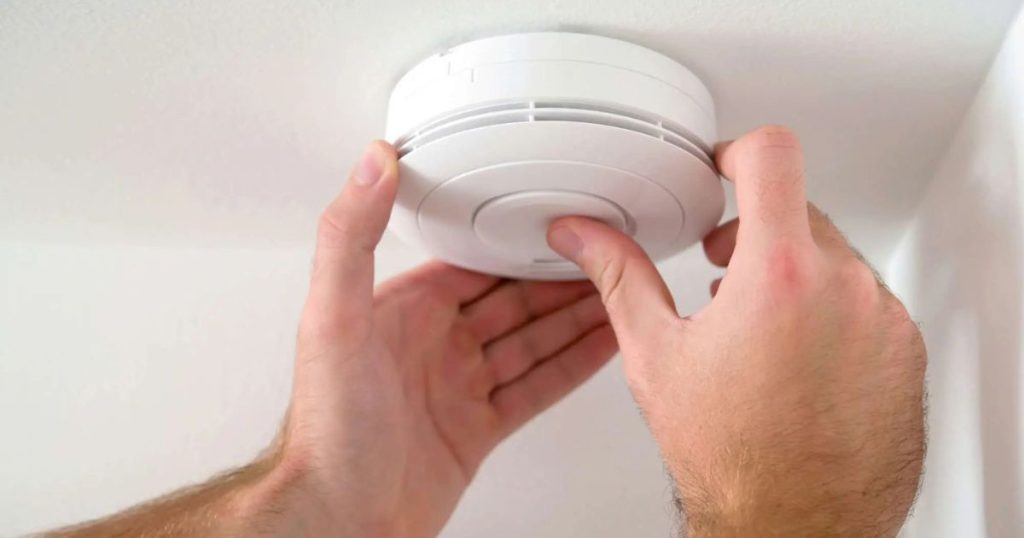
2. Press and hold the test button
Find the test button on the face of the alarm – it’s very east to spot.
Press it firmly, holding for at least 5 seconds or whatever the instructions provided by the manufacturer tell you. A working alarm should produce a loud series of beeps.
Yes, it will be loud – but that’s the whole point!
If you have children, pets or anyone particularly sensitive to loud noise nearby, giving them a quick warning first can save everyone a surprise.
Advice on how to test a smoke alarm Australia wide is generally very similar, but it’s worth saying again – always check the instructions for your particular model as well.
3. Test every single alarm
One noisy smoke alarm does not prove that the one outside the bedroom at the other end of the house is working.
So go through the property and test each unit individually.
For interconnected smoke alarms, check that the system behaves as intended when one alarm is tested. Depending on the model and setup, activating one may also cause the connected alarms to sound.
This step is really important if you’ve recently had electrical work or renovations done, or you’ve had individual alarms replaced.
4. Check the battery situation
A weak battery often announces itself politely with an occasional chirp, but you do not need to wait for that warning.
If your question is how to test smoke detector battery performance, the normal test-button check is the place to start. The alarm needs enough power to complete the test and sound properly.
There are a few different setups in Australian homes, though.
- Some alarms use replaceable alkaline batteries.
- Others have sealed 10-year lithium batteries.
- Hardwired smoke alarms are connected to mains power but commonly have battery backup as well.
When considering how to test a smoke alarm battery, do not rely on visually inspecting the battery itself. Actually test the alarm using its button and follow the manufacturer’s replacement instructions for that model.
If it uses a replaceable alkaline battery, Fire and Rescue NSW recommends changing it every year.
5. Give the alarm a clean
Testing and cleaning go together.
A lot of dust can collect around the openings of a smoke alarm over enough time. Fire and Rescue NSW recommends cleaning smoke alarms every 6 months.
A gentle vacuum around the outside of the alarm is usually all that is needed. Follow the manufacturer’s cleaning instructions and avoid spraying household cleaners, water or insect spray into the unit.
While you’re at it, check that nothing has been painted over or placed around the alarm in a way that could interfere with it.
6. Listen for anything that isn’t right
A proper test should give you a strong, unmistakable alarm. We all know what it sounds like, right?
So if the sound is weak or completely absent, or you’re just getting unusual repeat chirping sounds, something’s wrong.
We must stress how important knowing how to test a smoke alarm is working like this is – because an alarm can look completely normal while sitting silently on the ceiling, but be completely defective at the same time.
If it fails the test, start with the manufacturer’s instructions. A replaceable battery may simply need changing.
But if the problem involves a hardwired alarm, do not start disconnecting wiring yourself.
How often should you test your smoke alarm?
Easy answer here – once a month.
It’s the recommendation from Fire and Rescue NSW, and it is an easy habit to build into the normal maintenance of your home.
Consider this sort of routine:
Each month … test it.
Every 6 months … clean it.
Every year … replace batteries.
Every 10 years … replace the smoke alarm.
On that last one, never forget that while smoke alarms look and seem simple, they won’t last forever – even if they still beep when you press the button.
What if your smoke alarm doesn’t pass the test?
A failed test is not something to shrug at and ignore. It needs to be taken seriously … immediately.
Replace a removable battery if the alarm requires one and test it again. If it remains silent or it’s reached the end of its life or keeps behaving strangely, it may need replacing.
Hardwired alarms need extra care because they form part of the home’s electrical installation.
When it’s time to call an electrician
As you can hopefully tell, testing the button is a very simple DIY job. But installation or diving deeper into smoke alarm problems – especially the hardwired, interconnected ones – is very different.
The friendly team at Fluid Electrical can:
- Inspect your existing smoke alarms
- Replace ageing or faulty units and install new alarms where required.
- Check interconnected systems and make sure hardwired alarms are installed correctly.
If you are on the Central Coast or in Newcastle and your smoke alarm has failed its test or is well past its prime, call Fluid Electrical. A minute spent testing it today is a much better way to discover a problem than finding out when you actually need the alarm.