
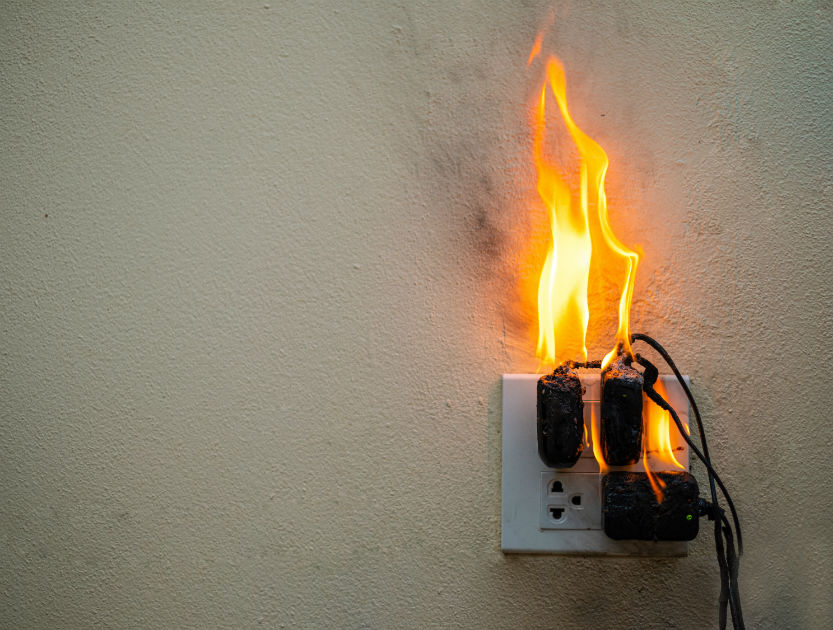



Any house fire is frightening. Flames spreading through your home, however it happens and on whatever scale, are one of the most disorienting things a person can ever go through. But an electrical fire tends to bring a different, somehow more chilling kind of fear – and there’s a good reason for that.
Most fires give you some warning. Something smoulders, some smoke starts to build – you smell it before you see it. But electrical fire can start:
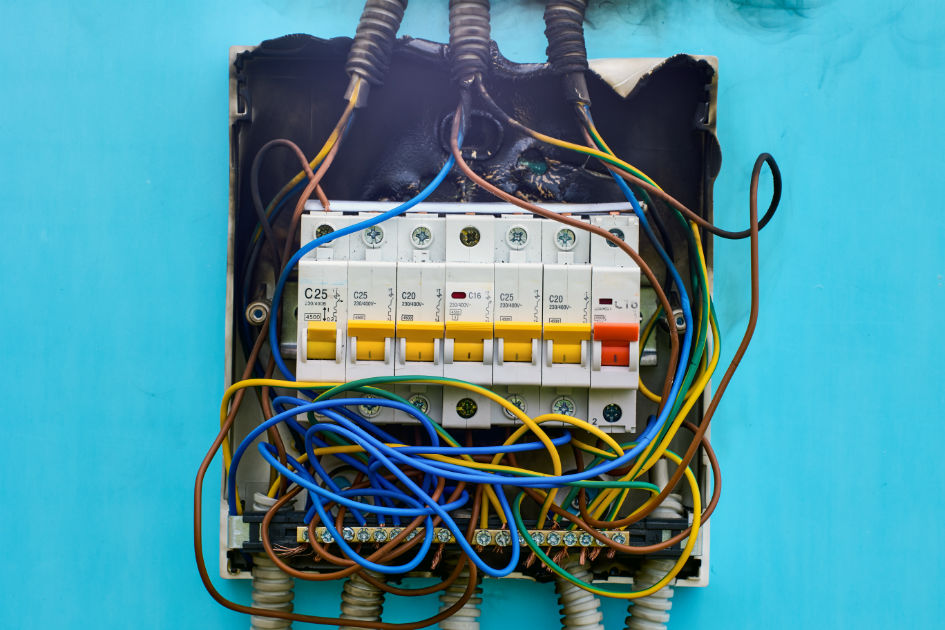
- Behind a wall
- Inside a switchboard
- Deep in an appliance you were about to walk past.
And what does that mean? It means the first sign you get is sometimes flame that’s already well established. And the instinct almost everyone has when they see a fire – grab water and throw it on – is EXACTLY the wrong move when electricity is involved. Water conducts electricity. So if the fire’s still live, you’re not putting it out, you’re potentially turning yourself into part of the circuit.
Why else is an electrical fire terrifying?
There’s also the reignition problem. You can knock down the visible flame and think it’s handled, but if the power’s still running to whatever started it, there’s a good chance it flares straight back up. That’s part of why these fires get taken so seriously – because they don’t always stay out just because they look out.
The smoke itself isn’t something to underestimate either, as burning insulation and plastic casings around wiring can put off fumes that are genuinely toxic. It’s just one more reason to get out fast rather than lingering to assess the situation.
And one more thing worth knowing before we get into how to put out an electrical fire: these fires usually trace back to a small handful of causes:
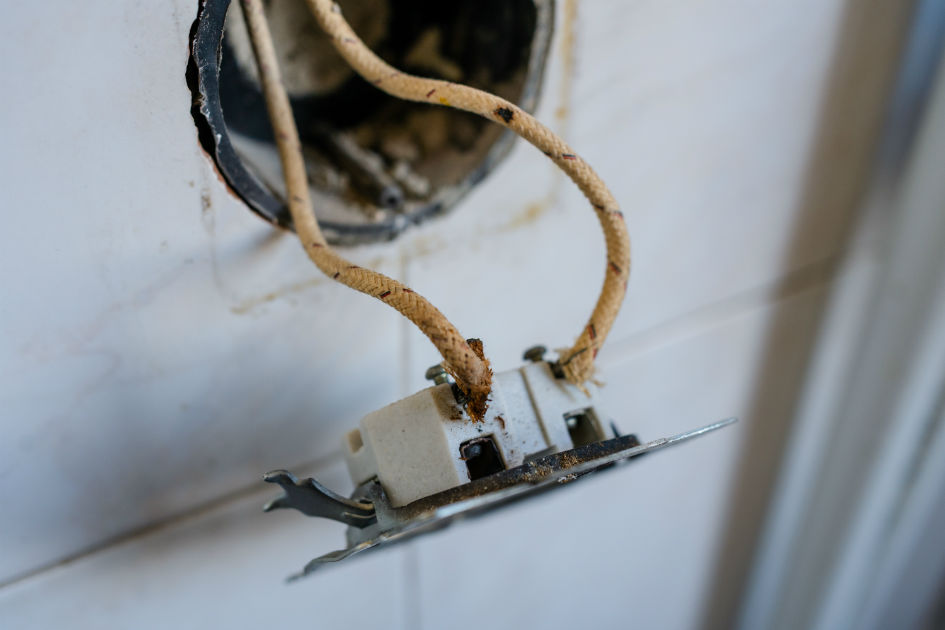
- Old or damaged wiring
- An overloaded power board
- A faulty appliance left running.
None of them look dangerous at all – until suddenly they are. And that’s exactly why so many of these situations catch people off guard.
What to do if this happens to you
If you’re ever unfortunate enough that it’s happening to you, here’s what to do … quickly!
1. Cut the power, if you can do it safely
If the switchboard is somewhere you can reach without going near the fire itself, cutting the power there is genuinely the single most useful thing you can do. It removes the thing feeding the fire and takes the electrocution risk off the table.
But if reaching it means walking through smoke or getting close to flame, skip this step entirely. It’s just not worth it.
2. Get everyone out first, figure out the fire second
Before you do anything else, make sure everyone in the house is aware and moving toward an exit. You’ve got seconds to make good decisions here, not minutes, and no possession or half-formed plan to fight the fire yourself is worth risking that.
3. Never reach for water
This one’s worth repeating on its own because it’s the instinct you have to actively override.
So:
- No water
- No wet towel
- No throwing a bucket at it.
If you’re not certain the power’s off, treat everything near that fire as electrically live and incredibly dangerous.
4. If it’s small and the power’s off, use the right extinguisher
Before we get into fire extinguishers at this point, we should start somewhere else: What is a fire extinguisher class? Because without knowing, it could be the difference between putting the fire out and making it even worse.
Fire extinguishers are rated by what they’re safe to use on. A standard water extinguisher covers ordinary combustibles like paper and wood, and that’s it. For anything involving live electrics, you need one rated for it specifically.
If you’re wondering what fire extinguisher for electrical fires actually works, it comes down to two real options:
- A CO2 extinguisher, which smothers the fire with gas and leaves nothing behind
- An ABE dry powder extinguisher, which also handles ordinary combustibles and flammable liquids.
Most homes that have one at all tend to go with the ABE, since it covers a wider range of household risks in a single unit. Either way, only attempt this if the fire is small, contained, and you’ve already cut the power or you’re certain it’s not live. If any of that isn’t true, skip straight to the next step.
5. If it’s growing, get out and stay out
Are you in one of these situations:
- Heavy smoke?
- Spreading flame?
- Any doubt at all about whether you can handle it safely?
That’s your cue to leave – don’t hesitate for a second longer. Close the door behind you as you go, as it slows the fire’s access to oxygen and buys the fire brigade a bit more time.
Call 000 from outside, once everyone’s clear.
6. Don’t go back in
Not for the extinguisher, not for the goldfish, not for anything. Whatever’s inside can be replaced. Let the professionals handle it from there.
After the fire’s out
Whether you managed it yourself or the fire brigade finished the job, don’t touch the switchboard or try to restore power on your own afterwards. Whatever caused it needs to be found and properly repaired before anything gets switched back on. And that’s a job for a licensed electrician, never something for a guess – and it’s worth having the whole circuit checked even if only one part of it was visibly affected. Remember, heat and smoke damage can travel further through wiring than it looks from the outside.
A fire like this is genuinely frightening to go through, but it’s also one of the more predictable emergencies out there, in the sense that the right response barely changes from situation to situation:
- Cut the power if it’s safe.
- Get people out.
- Never use water.
- Use the right extinguisher if the situation allows it
- If in doubt, get out and let the experts take it from there.
If you’ve had a close call, or you’re just not confident in the state of your wiring, switchboard or power boards, it’s worth getting it looked at before it becomes a bigger problem. The licensed electrical experts at Fluid Elelctrical can inspect and fix what’s actually causing the risk, with emergency callouts available if you need someone out fast.