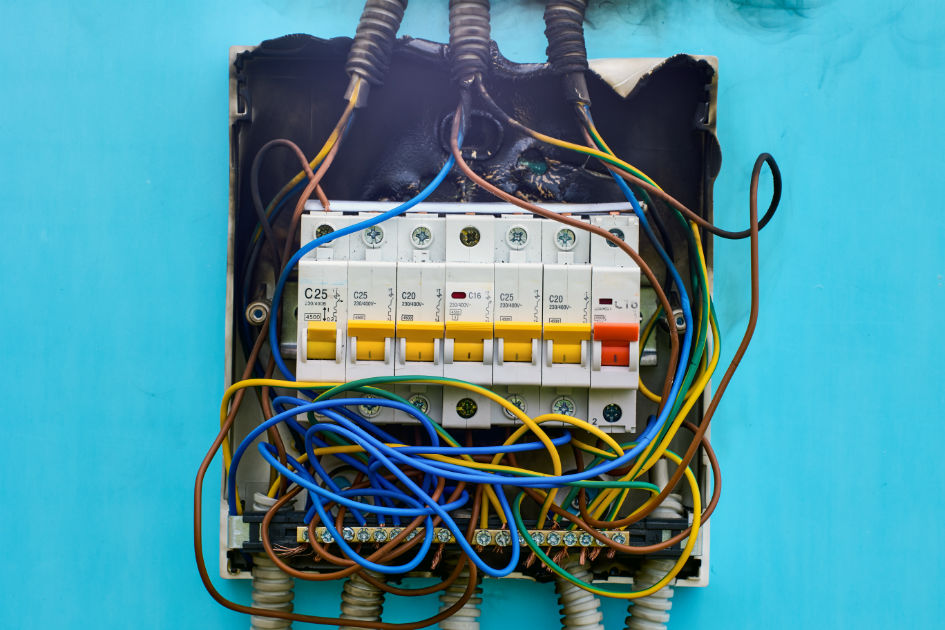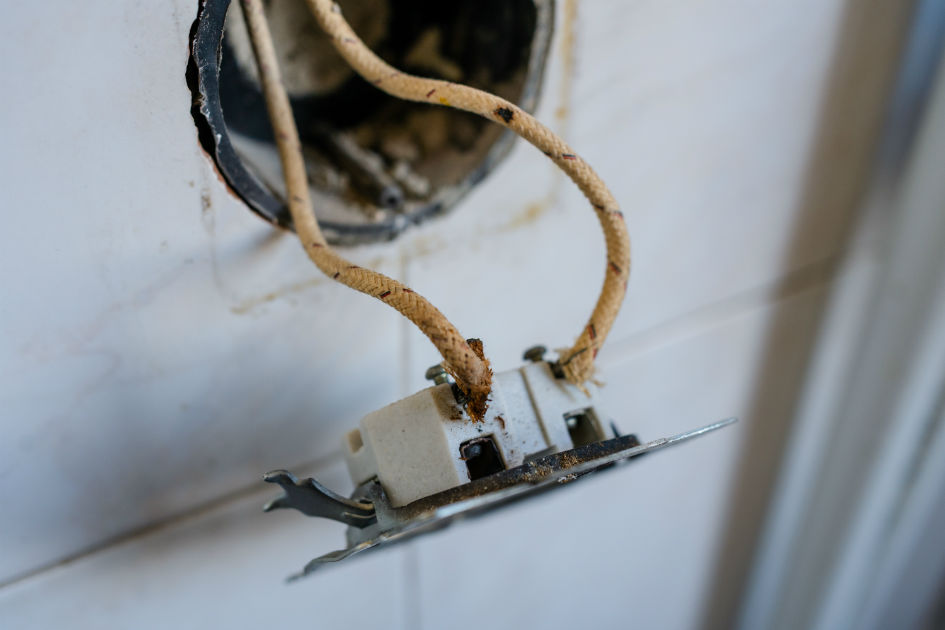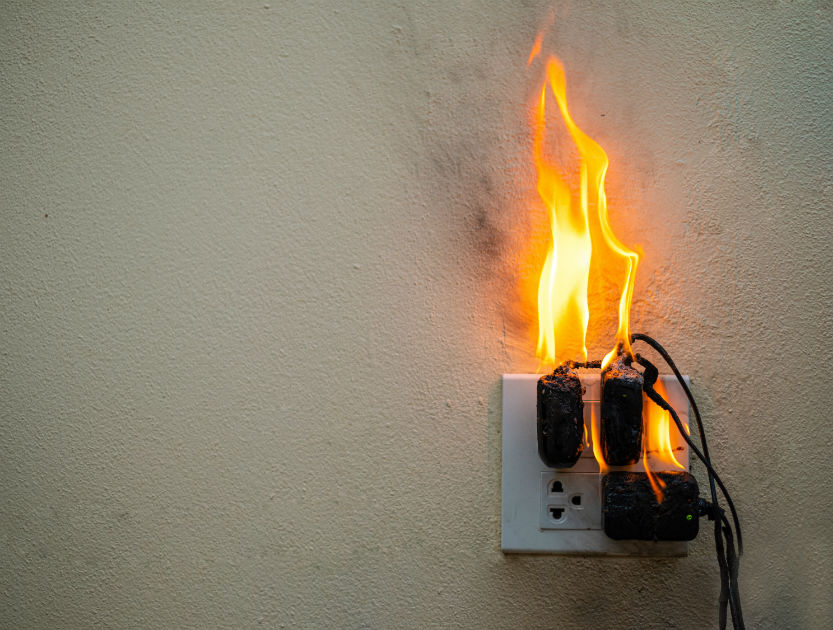

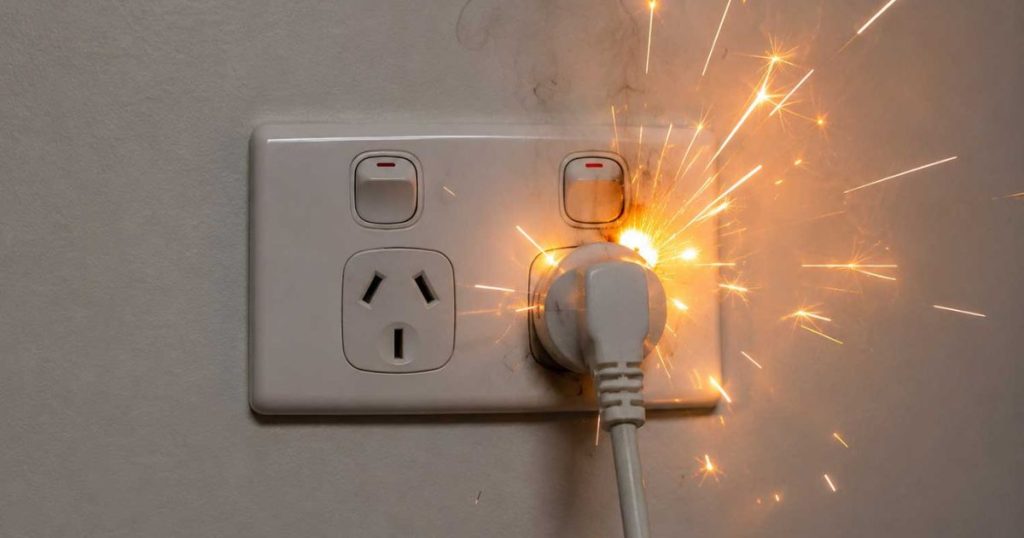



A sparking power point, no matter how it happens or when, is one of those things that catches your attention immediately. There’s something about seeing an actual spark come out of a wall fitting – getting an actual visual and sound effect on this otherwise very helpful thing called electricity – that hits differently compared to most other minor household glitches.
Your instinct to be alarmed isn’t wrong. Not at all. Because sometimes it’s the sign of something very serious. On the other hand, sometimes it really is … nothing. The tricky part is telling the two apart, because they can look almost identical in the nanosecond that you actually see it.
So, at this point, let’s make it simple:
- A single, brief spark exactly when you plug something in or pull it out is usually fine.
- Anything other than that needs to be treated very, very carefully and seriously.
Why a power point spark happens at all
Every time you plug something into a live socket, or unplug it while it’s still drawing power, there’s a tiny moment where the circuit is either completing or breaking. That exact moment can produce a small flash – known as arcing – and it’s a completely normal part of how power points work.
It’s the same basic principle behind why you’ll sometimes see a faint blue flicker plugging in a heater or a kettle under load. Not something you love to see, but not dangerous on its own – and it’s more noticeable on higher-draw appliances simply because there’s more current involved in that split second.
Where it stops being normal is when that spark shows up outside of that exact moment – or when it’s accompanied by anything else. So while a little spark is fine, here’s what’s not:
- Sound
- Smell
- Heat.
A simple connection and disconnection spark shouldn’t involve any of those three.
What’s normal vs what’s not normal?
The line between what’s normal and what’s not comes down to timing and what else is going on around it.
Normal:
A single, brief spark right as you insert or remove a plug, especially with something that draws a decent amount of power like a heater, toaster or vacuum.
It happens, it’s quick, and the socket looks and feels exactly as it should straight afterwards.
Not Normal:
1. Sparking with nothing plugged in
If it sparks on its own, with nothing being plugged in or removed at the time, that’s not ordinary arcing. Something behind the wall is arcing independently of anything you’re doing.
2. Buzzing or crackling sounds
Any humming, buzzing or crackling coming from the socket points to a loose or damaged connection working harder than it should.
3. A burning smell
The smell of burning or melting plastic near an outlet means heat’s already building somewhere it shouldn’t be. This one’s worth acting on straight away.
4. A hot faceplate
A power point should stay roughly room temperature. If the faceplate feels warm or hot to touch, there’s excess heat building up behind it.
5. Scorch marks or cracking
Any discolouration, scorch marks or a cracked cover around the outlet is physical evidence something’s already gone wrong, even if it looks minor.
6. A bigger or repeated spark
A spark that’s larger than a quick flicker, or one that keeps happening, isn’t a one-off. It’s a pattern, and patterns need checking.
If what you saw fits any of those 6 ‘not normals’, that’s your answer. It’s not something to keep an eye on and revisit later, it’s something to act on now.
What’s actually causing it
A power point sparking outside of normal plug-in arcing usually comes down to one of a few things.
Loose wiring behind the wall plate: This is the most common, where a connection that should be tight has worked its way looser over time and starts arcing internally.
Worn or damaged internal contacts inside an older socket: Another regular cause, particularly in homes that haven’t had an electrical inspection in a while.
Overloading: Too much power drawn through one circuit or one power board, which stresses the connection points well beyond what they’re rated for.
Moisture: Dampness can play a role too, especially in outdoor or bathroom-adjacent outlets, where even a small amount of dampness getting into the fitting is enough to cause intermittent arcing that looks a lot like a routine fault.
None of these are things you can diagnose by looking at the faceplate. What’s happening behind the wall is exactly that – behind the wall – and guessing at it is how minor issues turn into much bigger ones.
It’s also worth knowing that the outlet itself isn’t always where the actual fault sits – sometimes it’s further back along the circuit, and the socket’s just the place the symptom happens to show up.
So what should you do?
Apart from trying to Google ‘sparking power point electrician near me’, here are a few things you should be doing – in order – when your sparking is in the ‘not normal’ category:
Stop using that outlet straight away: Unplug whatever’s in it, and don’t plug anything else in until it’s been checked. If you can safely switch off the circuit at the switchboard, do that too; it takes the risk out of the equation while you sort out next steps.
Don’t try to open the faceplate or investigate it yourself: We know it’s tempting, especially if you’re handy around the house, but this genuinely isn’t a job for a screwdriver and a guess. Behind that plate is live wiring, and the fault causing the spark might not be visible even if you did open it up.
Get it looked at properly: A qualified electrician can isolate the circuit, inspect the socket and the wiring behind it, and tell you exactly what’s going on, rather than you working off a half-second glimpse of a spark from across the room. In most cases it’s a straightforward fix once someone’s actually inside the wall looking at it, the hard part is usually just getting to that point rather than the repair itself.
A couple more questions to ask yourself:
- Has it happened more than once at the same outlet?
- Have you noticed it at more than one point in the house?
Mention that to your electrician. A recurring pattern often points to something further up the circuit rather than a single faulty socket, and that changes what needs checking.
Don’t wait this one out
A spark like this is one of those things that’s easy to put off, especially if it seems to have settled down since. But faults like this don’t fix themselves – they tend to get worse. And the ones that do get worse tend to do it quietly, right up until they cause an electrical fire, or even worse.
Have you noticed sparking, buzzing or any warmth around a power point in your home? Get in touch with Fluid Electrical. Our licensed electricians can inspect the outlet, trace the actual cause, and fix it properly – with emergency callouts available if it’s happening right now. Reach out today.