
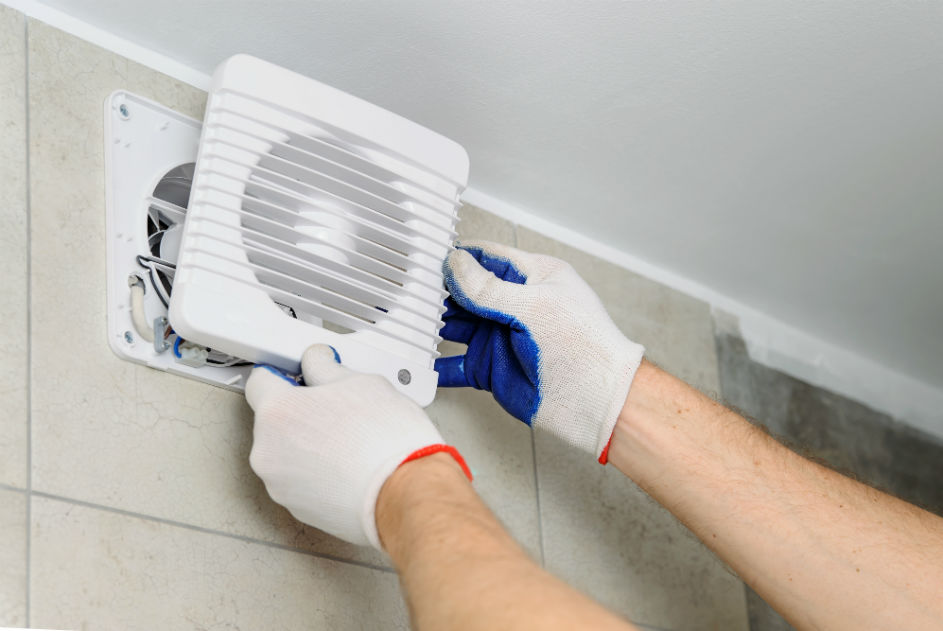



A bathroom exhaust fan not working is one of those problems that’s easy to ignore – or not even notice at first. Sure, the mirror takes a little longer to clear, but before long you could start noticing tiny black spots creeping across the ceiling – and then you have a much bigger problem.
Your exhaust fan may not seem like it’s doing much at all, but it’s actually doing a lot of quiet work behind the scenes. And when it stops doing what it’s supposed to do, that equally quiet and easy-to-ignore moisture has nowhere to go.
So how do you spot the problem? And what do you even do about it after that?:
Why your exhaust fan really matters
Every single hot shower or bath sends a lot of steam into the air – and your exhaust fan’s job is to draw that moist air out of the room before it settles on the walls and ceiling.
When the fan isn’t doing that job properly, the moisture lingers. Over time, it can lead to mould and peeling paint – along with that musty smell that never quite goes away. And in a humid region like the Central Coast and Newcastle, a working exhaust fan matters even more.
Signs your exhaust fan isn’t doing its job
A typical call we get sounds something like this: “I have an exhaust fan in the bathroom that’s not working – and a mirror that stays fogged up for ages after every shower.” But it’s not the blurred image of you in the mirror that is the big problem. Once those mould spots on the ceiling start to occur, that’s the clearest sign of all that you’ve had an exhaust fan not working in the bathroom for a lot longer than you may have even known about.
There are some other classic signs to watch out for too:
- Steam hanging around long after you’ve finished showering?
- Fan hums but the blades aren’t spinning?
- Grinding or rattling noises when it’s running?
- Blades turning slowly or unevenly?
- Nothing happens at all when you flick the switch?
There’s also a simple way to check the airflow:
Simply hold a single square of toilet paper up to the fan cover while it’s running. A healthy fan will pull it flat against the grille. A weak one, though, will barely move it at all.
7 Common causes & how to fix them
So: why is my exhaust fan in the bathroom not working when it seemed fine last month?
There are 7 common reasons that we see very often:
1. Power isn’t reaching the fan
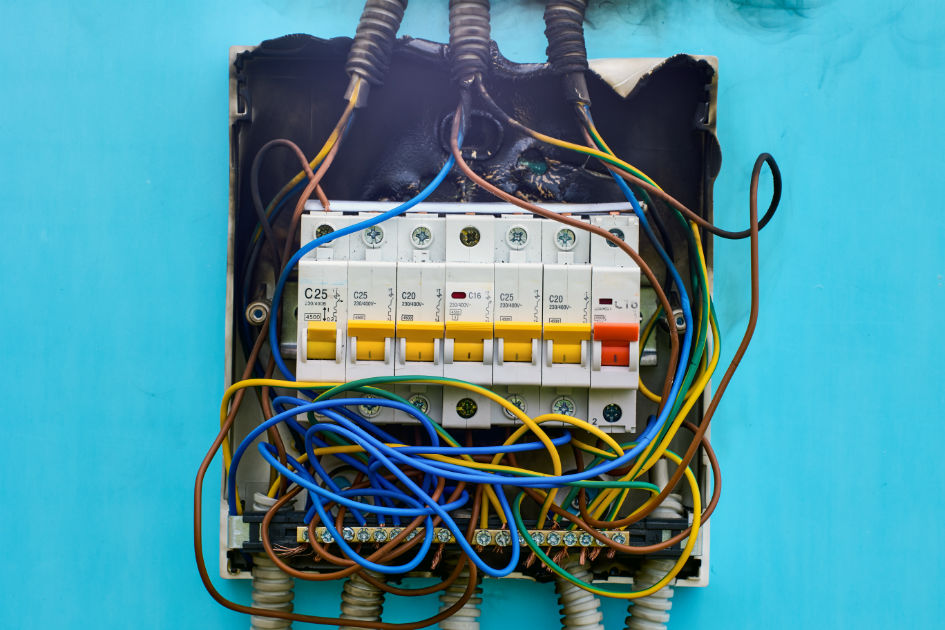
If the fan is completely dead, start at the switchboard. A tripped circuit breaker or safety switch can cut power to the fan without you noticing a thing.
WHAT TO DO:
- Reset the breaker once
- If it trips again, leave it off
- Call an electrician.
2. A faulty switch or timer
Wall switches and run-on timers simply wear out over time – and a faulty one can stop the fan from starting even though the fan itself is perfectly fine.
WHAT TO DO:
A licensed electrician can test the switch and replace it if needed.
3. Dust & grime build-up
Exhaust fans are designed to pull in the steam, but they end up sucking in more than just that.
Plenty of dust and lint gathers on the cover and blades, slowing the fan down and making it noisy.
WHAT TO DO:
- Turn the power off at the switchboard
- Remove the cover
- Gently clean it along with the blades.
A quick clean like this every few months keeps the fan running smoothly for years.
4. Worn bearings
The bearings that let the motor spin freely wear out with age, which usually shows up as grinding or squealing.
WHAT TO DO:
Worn bearings generally mean it’s time for a new fan, since replacing the bearings on their own is rarely worth it.
5. A burnt-out motor
A fan that hums but won’t spin, or one that’s gone completely silent with power reaching it, often has a motor that’s burnt out from years of use.
WHAT TO DO:
In just about every single case, the best fix is replacing the fan with a new unit.
6. Blocked or disconnected ducting
A bathroom exhaust fan not working well is often a ducting problem. The fan runs – but the duct in the roof space has come loose or become blocked, so the moist air never actually leaves the house.
WHAT TO DO:
An electrician can check the ducting in the roof space and reconnect or replace it. The duct should always vent outside, since a fan that simply pushes steam into the roof space can cause damp problems up there.
7. A fan that’s too small for the room
Some fans have simply never done a great job, even straight out of the box. Maybe it was just cheap and nasty, or maybe yours has always been too small for the size of the bathroom.
WHAT TO DO:
Upgrading to a more powerful fan, sized properly for the room, makes a noticeable difference.
What you can check yourself
If you’re trying to work out why your bathroom exhaust fan is not working, a few simple checks are safe for most people:
- Check the switchboard for a tripped breaker
- Do the toilet paper airflow test
- Clean the cover and blades with the power switched off.
Anything beyond that, we’re afraid – including the wiring and the motor – needs a licensed electrician. In New South Wales, electrical work has to be carried out by a licensed professional, and exhaust fans are wired directly into your home’s power.
Repair or replace?
A few bathroom fan repair jobs are quick fixes – minor things like a loose duct or a faulty switch. But if your fan is old or has a worn-out motor, replacing it is usually the much smarter choice.
Modern exhaust fans are quieter and much more efficient than older models – and some even come with handy features such as run-on timers and humidity sensors that switch the fan on automatically when the room gets steamy. And if you’re renovating, it’s also the perfect time to make sure the new fan is sized for the room and ducted outside.
Get your exhaust fan working again
Fluid Electrical‘s licensed electricians can find out why your exhaust fan has stopped working and repair or replace it, all across the Central Coast and Newcastle region. You’ll get upfront pricing before any work begins and a workmanship guarantee on every job. Call before midday for same-day service – or reach us 24/7 for jobs that can’t wait.